
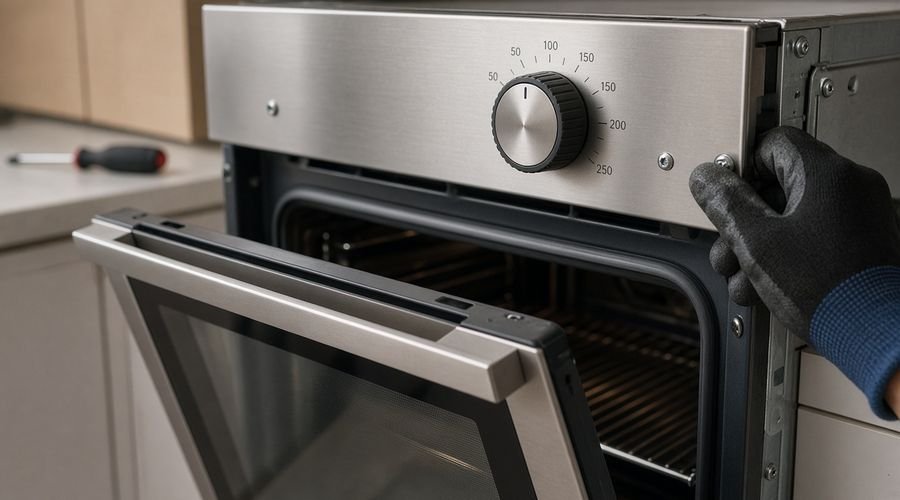
«Oven temperature swings: sensor placement before you replace the board» is less about a clever tip and more about a repeatable check. This piece walks through how to use oven temperature swings without busywork. Written for appliancerescue.team readers who want steps, stop rules, and plain language.
Sensor: start clean
Write the baseline before you change anything around oven temperature swings. Date, what you tried, constraints, and what “good enough” looks like in two to four weeks. Cross-check context on this page.
Cut the stack to one primary action and one backup. Define a stop signal in advance.
Calibration myth: common failure modes
Changing five variables hides the cause. For oven temperature swings, change one per cycle. Keep contacts handy: reach out here.
Short videos sell simplicity and hide downside. Prefer internal notes like this section.
Bake test: a simple order
- State the oven temperature swings goal in one sentence.
- Pick one main method and one fallback.
- Set a mid-check date and metric.
- Write stop conditions.
- Only then add complexity.
Half a page of notes is enough: date, action, result, question.
Parts: reading progress
Progress should be observable. If nothing moved by the check date, revisit the baseline. Archive: here.
Bottom line: treat oven temperature swings as a process with checkpoints.
Extra note on «Oven temperature swings: sensor placement before you replace the board» (1): drop any step you skipped three times. For oven temperature swings, repeatability beats a long list you never open. Keep a mid-week checkpoint, write the exact signal you will trust, and avoid stacking new tools until the baseline is stable for several days in a row.
Extra note on «Oven temperature swings: sensor placement before you replace the board» (2): drop any step you skipped three times. For oven temperature swings, repeatability beats a long list you never open. Keep a mid-week checkpoint, write the exact signal you will trust, and avoid stacking new tools until the baseline is stable for several days in a row.
Extra note on «Oven temperature swings: sensor placement before you replace the board» (3): drop any step you skipped three times. For oven temperature swings, repeatability beats a long list you never open. Keep a mid-week checkpoint, write the exact signal you will trust, and avoid stacking new tools until the baseline is stable for several days in a row.
Extra note on «Oven temperature swings: sensor placement before you replace the board» (4): drop any step you skipped three times. For oven temperature swings, repeatability beats a long list you never open. Keep a mid-week checkpoint, write the exact signal you will trust, and avoid stacking new tools until the baseline is stable for several days in a row.
Extra note on «Oven temperature swings: sensor placement before you replace the board» (5): drop any step you skipped three times. For oven temperature swings, repeatability beats a long list you never open. Keep a mid-week checkpoint, write the exact signal you will trust, and avoid stacking new tools until the baseline is stable for several days in a row.
Extra note on «Oven temperature swings: sensor placement before you replace the board» (6): drop any step you skipped three times. For oven temperature swings, repeatability beats a long list you never open. Keep a mid-week checkpoint, write the exact signal you will trust, and avoid stacking new tools until the baseline is stable for several days in a row.